Interview to Fouad SAHYOUN from Grenoble INP
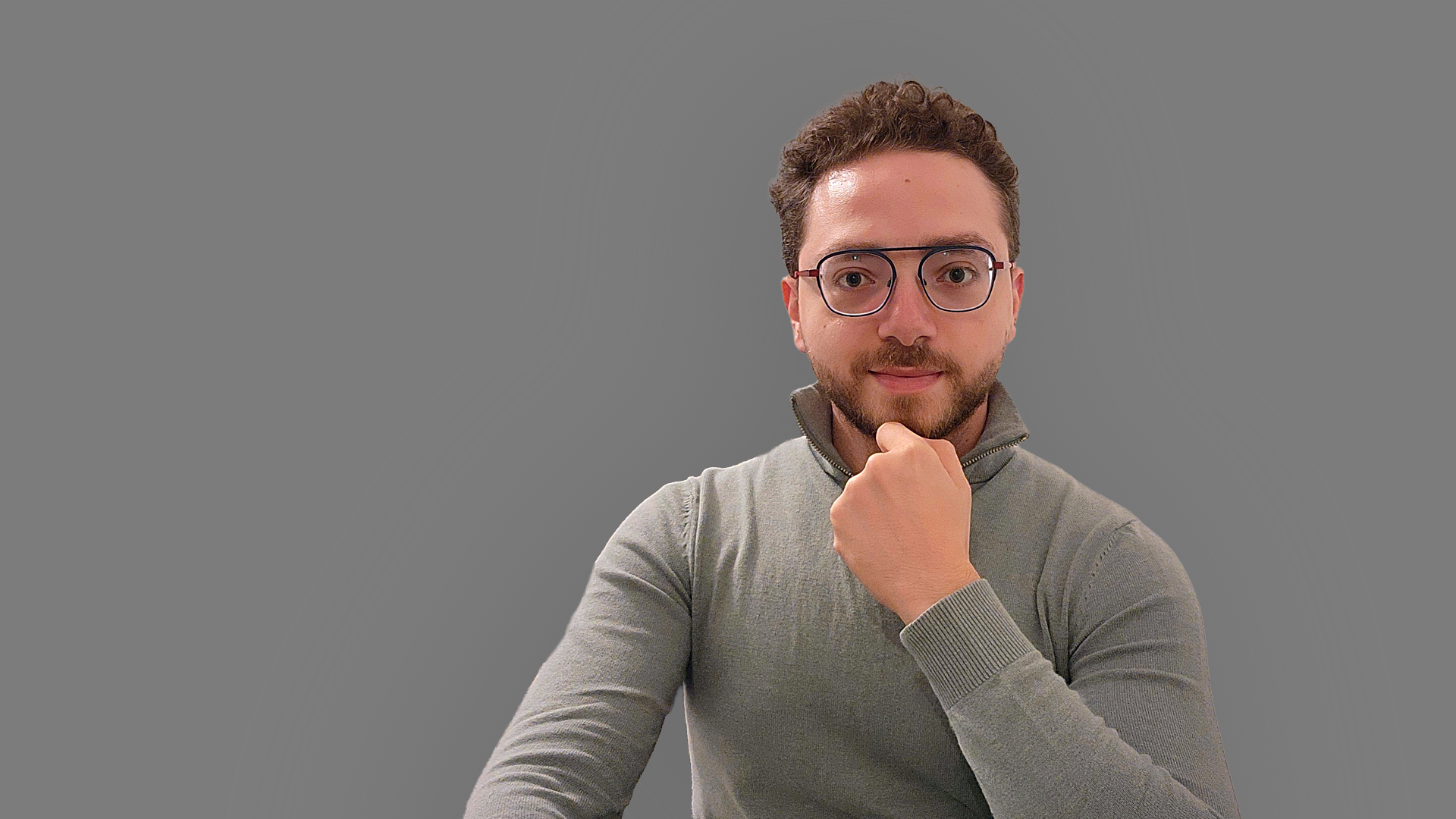
How can you learn more about LAUDS Factories? Read the interview with one of the key protagonists: Fouad Sahyoun from Grenoble INP
What LAUDS means and how do you envision the future of production in Europe?
We often hear calls to rethink production: to innovate, to explore new methods and build models that respond to the demands and challenges of our century. I believe LAUDS is redefining what an urban factory can be and stands at the threshold of a new industrial paradigm: one that envisions local, sustainable, and human-centered production grounded in the values of the New European Bauhaus. It is not just another place to produce, but a vibrant ecosystem embedded in the local community, democratizing access to manufacturing and inviting diverse talents to contribute, experiment, and innovate without barriers. Artists, designers, makers, engineers, and citizens collaborate openly to bring ideas to tangible solutions. Each LAUDS Factory is a hybrid space: a workshop, a digital co-creation lab, and a community hub. By fostering inclusivity and cross-pollination of knowledge, and by combining creativity with technical expertise, LAUDS enables the co-creation of small-series, customized products that are meaningful, sustainable, and deeply connected to people’s lives and cultural contexts – while reducing supply-chain vulnerabilities and strengthening urban industrial resilience.
I envision Europe’s future production as a network of distributed, flexible urban factories that are versatile, collaborative, and environmentally responsible. These LAUDS-inspired spaces would integrate circular, green, and digital practices into production, supporting local economies, nurturing new skills, and creating socially inclusive opportunities. In this vision, manufacturing becomes a participatory act – an art of making – that connects communities, mobilizes local resources, revives local traditions, and drives innovation. In this model, LAUDS is not just a project; it is a blueprint for Europe’s industrial future, where human creativity, aesthetics, and sustainability shape every product and service. Above all, our role is to provide an approach that is applicable, transferable, and ready to be replicated across regions – and I truly hope we can help make this transformation a reality.
What’s the role of the Grenoble INP?
As a research partner in LAUDS Factories, we develop and propose innovative models and methods to guide the implementation of local, accessible, urban, digital, and sustainable factories. Our work focuses on participatory design and co-creation approaches that bring together diverse stakeholders, ensuring each LAUDS Factory is well adapted to its territorial context.
Through the development of a collaboration maturity model and readiness-level scales, we facilitate knowledge sharing, coordination, and smooth workflows among selected projects from open calls 1 & 2, helping them achieve better outcomes and integrate more effectively into the emerging industrial ecosystem. We also support the scaling of makerspaces into fully functioning LAUDS Factories by helping identify diverse stakeholder needs for LAUDS infrastructure, as well as the related opportunities and challenges. Beyond this, Grenoble INP will contribute to the training pool and help enhance the uptake of tools that consolidate the overall LAUDS framework.
What expertise can you offer?
I have always been fascinated by how things are made and by the technical and practical challenges involved, which naturally led me to pursue a background in mechanical engineering and a master’s in industrial engineering. This equipped me with analytical and critical thinking abilities, problem-solving skills, and attention to detail – all of which I apply directly to the LAUDS project. At Grenoble INP / G-SCOP laboratory, I have benefited from a rich research environment and close collaboration with specialized colleagues in fields such as stakeholder interactions in product and service design, sustainability and eco-design principles, urban manufacturing, and operations management of production systems. This experience has enabled my supervisors and me to develop a deep understanding of the requirements for implementing LAUDS Factories and to propose collaboration maturity indicators, tools to support multidisciplinary hybrid teams, as well as developing makerspaces capabilities. By combining G-SCOP’s long-standing expertise in industrial engineering with interdisciplinary perspectives, we contribute to practical, human-centered solutions and help identify critical factors that enhance the functionality, sustainability, and replicability of LAUDS Factories across diverse urban contexts.
This experience continues to help me grow professionally and personally. Working with partners across Europe has been both inspiring and motivating, pushing me to broaden my perspective and meet the high ambitions of the LAUDS project.