Interview to Serena Cangiano, head of the FabLab Digital fabrication and Open Innovation lab SUPSI
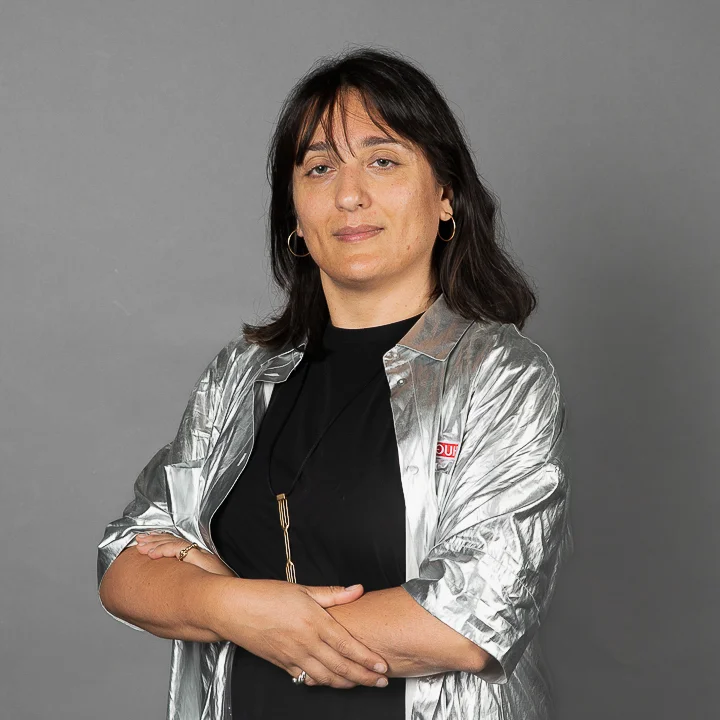
How can you learn more about LAUDS Factories? Read the interview with one of the key protagonists: Serena Cangiano head of the FabLab Digital fabrication and Open Innovation lab SUPSI
What LAUDS means and how do you envision the future of production in Europe?
Europe possesses remarkable production knowledge and infrastructure, but there is still a gap in digitalisation that we need to address thoughtfully. Rather than simply adopting existing models, I believe it is time to develop a paradigm of production that offers a genuine alternative to approaches focused solely on technology as a key parameter for digital transformation: buying 100 robotic arms to produce faster and better is not the solution. In Europe we can envision a model that looks at the skills of producers as well as the education of customers in new models of consumption.
There are already many realities in Europe implementing new concepts and moving towards a green transition. Makerspaces and Fab Labs have been the prototyping places for these concepts, but now we witness the growth of small and medium enterprises that are truly implementing sustainable and circular production with real pricing models.
The future I envision for European production is one where creativity and sustainability are not add-ons but fundamental drivers. Where small-scale, distributed manufacturing can coexist with traditional industry, and where communities have agency in shaping what and how things are produced locally.
What’s the role of FabLab Digital fabrication and Open Innovation lab SUPSI?
The role of SUPSI Design Institute and FabLab is to bring a design-driven perspective to production and manufacturing. We are approaching this through several interconnected activities.
Firstly, we are mapping the actual landscape and community through an experimental web interface. This is not just about creating a directory; it is about understanding the ecosystem of innovators and local manufacturers who are already working in this space.
We are also using AI and computational methods to identify standards of documentation and business models. This helps us understand what works, what can be replicated and how different approaches to sustainable production can be shared more widely.
Reaching out to different stakeholders is essential to bringing this concept to life. We are building bridges between designers, manufacturers, policymakers and communities to create a shared understanding of what is possible.
Perhaps most importantly, we are supporting the hybrid teams from the Open Call to better document and share their work for replicability. We have developed a design tool called LAUDS Blueprint specifically for this purpose, helping teams articulate their processes, challenges and innovations in ways that others can learn from and adapt.
What expertise can you offer?
I bring 15 years of work and research on design-driven innovation generated in environments bridging creativity and technology, such as interaction design labs and fablabs. This experience has taught me how design can transform not just what we make, but how we organise production, involve communities and create value beyond profit. I also bring expertise in coaching design start-ups with a focus on social innovation. I hope this can help the hybrid teams to generate projects that are sustainable in the real world.